
)
Why Lifters Need a Meal Planning System (Not a Meal Plan
Random eating gives random results. If you want consistent strength, muscle, or fat-loss progress, you need a repeatable system that makes hitting your nutrition targets almost automatic.
This isn’t a rigid “eat this at 7:30 AM” prescription. It’s a practical meal planning framework you can tailor to your lifestyle, training split, and preferences.
Step 1: Define Your Training Week
Your meals should support your actual training schedule.
Example structures:
- Beginner (3x/week): Full body on Mon/Wed/Fri.
- Intermediate (4x/week): Upper/Lower split.
- Advanced (5–6x/week): Push/Pull/Legs or Upper/Lower + specialty days.
- Heavy training (hard lifting, long or intense sessions).
- Light or rest (technique work, mobility, walking, or off days).
Mark each day as:
You’ll eat slightly more carbs and calories on heavy days, and slightly less on light/rest days, while keeping weekly averages aligned with your goal.
Step 2: Build Your Core Calorie and Protein Targets
Regardless of goal, two things rarely change much:
- Protein: 0.7–1.0 g per lb of body weight.
- Calories: Slight weekly surplus for gain, deficit for loss, maintenance for recomposition.
Pick your goal:
- Cut → ~250–500 kcal below maintenance.
- Gain → ~150–300 kcal above maintenance.
- Recomp → around maintenance.
Keep protein stable every day, adjust primarily with carbs and fats.
Step 3: Create 2–3 Go‑To Meal Templates Per Meal
Instead of 50 recipes, you need a short list of reliable templates.
Breakfast Templates
Template 1: Protein + Oats Bowl
- Rolled oats
- Whey or plant protein
- Fruit (banana, berries)
- Nuts or nut butter
- 2–3 whole eggs + 2–3 whites
- Whole-grain toast or potatoes
- Spinach or vegetables
Template 2: Egg-Based Plate
Lunch Templates
Template 1: Power Bowl
- Protein: chicken, turkey, tofu, tempeh, beans
- Carbs: rice, quinoa, potatoes
- Veg: large handful of greens + other veg
- Fat: olive oil, avocado, nuts
- Whole-grain wrap
- Lean protein
- Veggies
- Light sauce or hummus
Template 2: Loaded Wrap
Dinner Templates
Template 1: Simple Protein + Carb + Veg
- Protein: fish, lean beef, tofu, lentils
- Carbs: pasta, rice, potatoes
- Veg: roasted or stir-fried
- Fat: olive oil, butter, or sauce
- Chili, curry, or stew with a clear protein source
- Serve over rice or potatoes
Template 2: One‑Pot Meals
Snack Templates
- Greek yogurt + fruit
- Protein shake + piece of fruit
- Cottage cheese + crackers
- Nuts + jerky or edamame
Assign 2–3 templates per meal so you can mix and match easily.
Step 4: Plug Templates Into Training and Rest Days
Now structure your week.
Heavy Training Day Example (Muscle Gain)
Goal: slightly higher carbs and calories.
- Breakfast: Protein + oats bowl
- Pre-workout: Power bowl (more rice/potatoes)
- Post-workout: Shake + cereal/fruit
- Dinner: Protein + carb + veg (larger carb portion)
- Snack: Yogurt + fruit
Rest Day Example (Fat Loss)
Goal: slightly fewer carbs, same protein.
- Breakfast: Egg-based plate (more veg, less toast)
- Lunch: Power bowl (more veg, slightly less rice)
- Snack: Cottage cheese + veg sticks
- Dinner: Protein + veg + modest carb
Keep protein template portions similar across days. Adjust carb-heavy parts of the templates to move calories up or down.
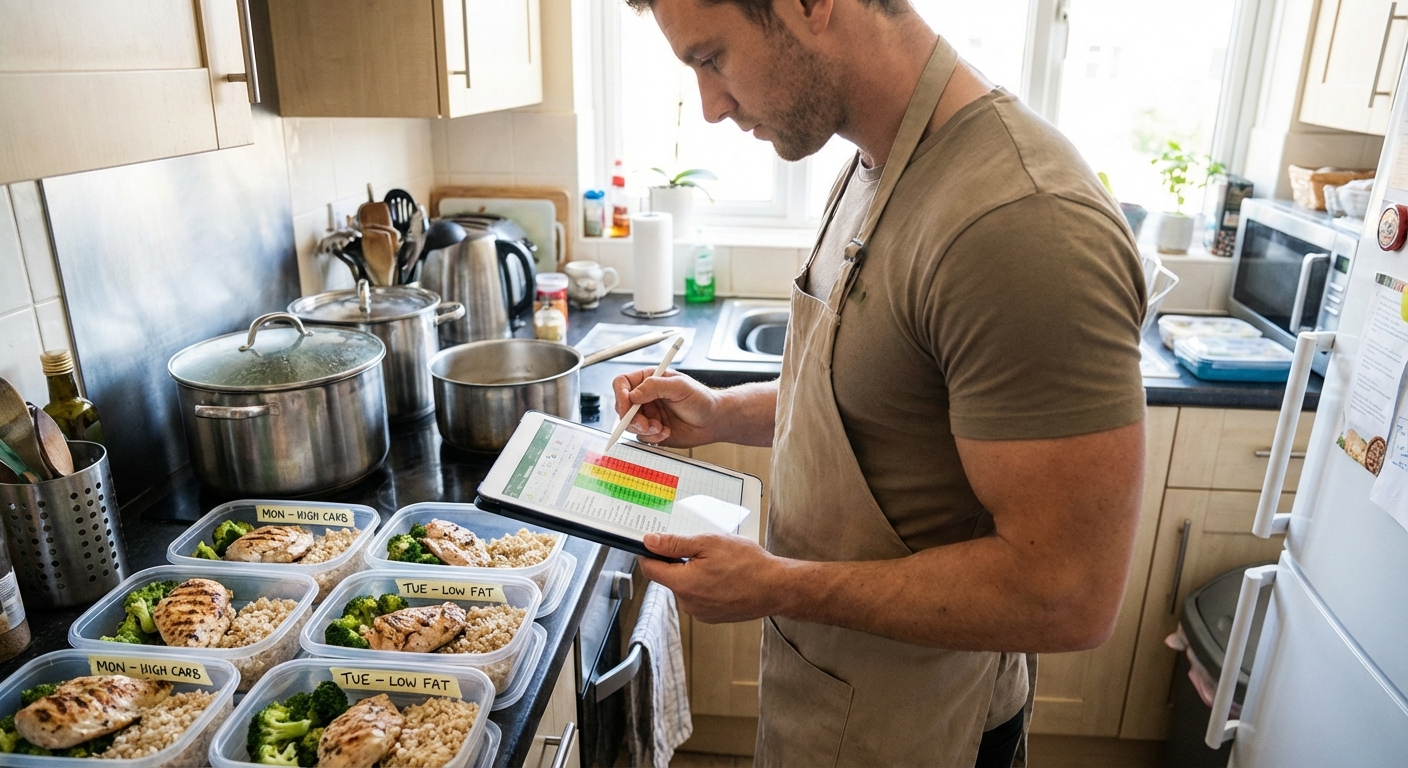
Step 5: Batch Cook Key Components
To execute consistently, simplify your prep.
Twice a week, cook:
- 2–3 proteins in bulk: e.g., chicken breast, ground turkey, tofu, lentils.
- 2–3 carb sources: rice, quinoa, roasted potatoes, pasta.
- Chopped veg: salad mix, pre-cut stir-fry veg, frozen veg.
Store them in separate containers so you can assemble meals in 5–10 minutes.
Example:
- Throw rice + chicken + veg into a bowl, add olive oil → power bowl.
- Heat potatoes + salmon + broccoli → dinner plate.
Step 6: Sync Meal Timing With Your Training
You don’t need perfect timing, but you do want fuel near your training.
- Eat a substantial meal 1–3 hours before lifting (protein + carbs, low in heavy fats).
- If you train early and can’t eat a big meal, have something small: shake + fruit or yogurt.
- Eat a balanced meal with protein + carbs within a few hours after training.
Example (after-work training):
- 7:30 AM: Breakfast
- 12:30 PM: Lunch
- 4:30 PM: Snack (pre-workout)
- 6:00 PM: Lift
- 7:15 PM: Dinner (post-workout)
Step 7: Track 3 Key Metrics
You don’t need to track forever, but at least 2–4 weeks of consistent tracking is eye-opening.
- Body weight: 2–4x/week, morning, average weekly trend.
- Training log: exercises, sets, reps, weights, and RPE (how hard it felt).
- Food intake: portions or macros (even roughly) while you learn.
Adjust if:
- Weight trend is off from your goal for 2+ weeks.
- Performance is stalling and recovery feels poor.
- Hunger or energy feels unsustainable.
Make small changes (100–150 kcal) and then reassess.
Step 8: Exercise Form Tips to Maximize What You Eat
Fuel only helps if it becomes effective training.
- Warm up with purpose: 5–10 minutes of easy cardio + 1–2 lighter sets for each main lift.
- Brace your core: deep breath into your belly, tighten before squats, deadlifts, presses.
- Use a full, controlled range: no bouncing at the bottom of squats or bench.
- Progress with intention: add 1–2 reps or 2.5–5 lbs when sets feel easier.
Good pairing example:
- On heavy squat day, ensure your pre-workout meal includes solid carbs (rice, oats, bread).
- On rest days, focus more on protein and vegetables, moderate carbs.
Step 9: Make the System Yours
Your life will change; your training and schedule may, too. Adapt:
- Busy week? Rely more on ready-to-eat options (rotisserie chicken, pre-cooked grains, frozen veg, pre-made salads).
- Traveling? Use your templates as a guide at restaurants: identify protein + carb + veg on each menu.
- Appetite swings? On hungry days within your plan, favor high-fiber carbs and lean proteins.
The system works as long as:
- Calories and protein are roughly on target weekly.
- You’re training with good form and progressive overload.
- You adjust based on real-world feedback, not emotion alone.
From Kitchen to PRs: Bringing It Together
- Define your training days and match your heavy days with extra carbs.
- Set calories and protein based on your goal.
- Build meal templates, then batch cook the components.
- Track progress, adjust in small increments.
When your kitchen is organized around your lifting, your next PR becomes a matter of time and consistency, not luck.