
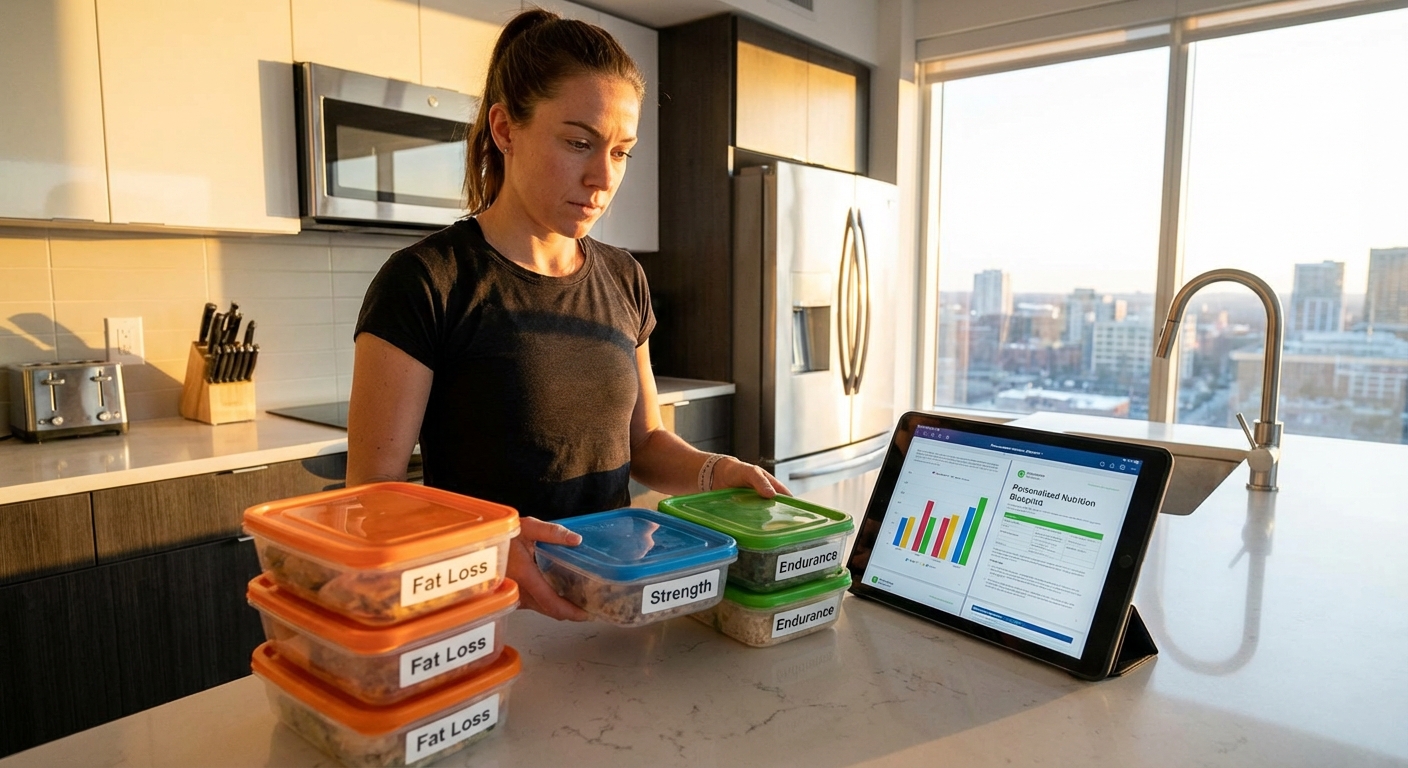
You can train hard and still stall if your nutrition is guessing instead of planning. Research consistently shows that calorie and protein intake are the biggest nutritional predictors of progress in strength, fat loss, and muscle gain.
Why Your Nutrition Plan Matters More Than Your Workout
This blueprint gives you a clear, adaptable plan that works whether you’re a beginner learning push-ups or an advanced athlete chasing a new PR.
Step 1: Set a Goal and Match Your Calories
Your nutrition plan starts with one question: What’s your primary goal right now?
Fat loss (cut)
- Target: ~250–500 kcal/day deficit below maintenance. - Faster losses = more muscle risk. Aim for 0.5–1% of body weight per week.
Muscle gain (lean bulk)
- Target: ~150–300 kcal/day surplus above maintenance. - Aim for 0.25–0.5% of body weight gain per week to minimize fat.
Recomposition (gain muscle + lose fat slowly)
- Target: around maintenance (slight deficit or surplus, +/- 100–150 kcal). - Works best if you’re relatively new to training, detrained, or coming back from a break.
Quick Maintenance Estimate
A simple starting point:
- Men: body weight (lb) × 14–16
- Women: body weight (lb) × 13–15
Adjust by ~100–150 kcal every 1–2 weeks based on scale trend, performance, and how you feel.
Step 2: Lock In Your Macros (With Science, Not Fads)
Protein: The Non-Negotiable
Evidence is clear: 1.6–2.2 g of protein per kg of body weight (0.7–1.0 g/lb) per day maximizes muscle growth and retention.
- Aim: 0.7–0.9 g/lb if you train regularly.
- Higher end if you’re lean or in a calorie deficit.
- Chicken, turkey, lean beef, eggs, Greek yogurt, cottage cheese
- Tofu, tempeh, lentils, beans, seitan, soy milk, plant-based protein powders
Great sources:
Carbs: Performance Fuel
Carbs are your primary training fuel. Low-carb isn’t “bad,” but for lifting, conditioning, and high-intensity work, adequate carbs usually equal better performance and recovery.
- Moderate training (3–4x/week): ~2–3 g carbs/lb body weight
- Heavy training (5–6x/week, intense): ~3–4+ g carbs/lb
- Oats, rice, potatoes, quinoa, whole-grain bread, fruit
Prioritize:
Fats: Hormones and Satiety
Dietary fat supports hormones, cell function, and vitamin absorption.
- Aim for 0.3–0.5 g fat/lb body weight.
- Focus on: olive oil, avocado, nuts, seeds, fatty fish, egg yolks.
Once protein and fats are set, fill remaining calories with carbs and/or a bit more protein or fat based on preference.
Step 3: Align Your Plate With Your Training
Sample Balanced Day (for a 150 lb lifter in a lean bulk)
- Calories: ~2,400
- Protein: ~130 g
- Carbs: ~280 g
- Fats: ~70 g
- Oats cooked in milk, topped with berries and peanut butter
- 2 whole eggs + 2 egg whites
- Rice or potatoes
- Chicken breast or tofu
- Fruit (banana or apple)
- Protein shake (whey or plant-based)
- Cereal or rice cakes + fruit
- Salmon or tempeh
- Quinoa or sweet potato
- Mixed veggies cooked in olive oil
Meal 1 – Breakfast
Meal 2 – Pre-workout (60–90 mins before)
Meal 3 – Post-workout
Meal 4 – Dinner
Adjust portion sizes based on your own calorie target.
Step 4: Train Smart – Sample Weekly Routines
Beginner (3x Full Body)
Day A & B rotation (e.g., Mon/Wed/Fri):
Day A
- Squat (dumbbell or barbell): 3 × 8–10
- Push-up or incline push-up: 3 × 8–12
- Dumbbell row: 3 × 8–12
- Glute bridge: 3 × 10–15
- Plank: 3 × 20–40 sec
- Romanian deadlift (RDL): 3 × 8–10
- Dumbbell bench press: 3 × 8–12
- Lat pulldown or assisted pull-up: 3 × 6–10
- Walking lunges: 3 × 8–10/leg
- Side plank: 3 × 20–30 sec/side
Day B
Intermediate/Advanced (4x Upper/Lower)
Upper 1 (strength focus)
- Bench press: 4 × 4–6
- Weighted pull-up or heavy row: 4 × 4–6
- Overhead press: 3 × 6–8
- Chest-supported row: 3 × 6–8
- Triceps dips + curls superset: 3 × 8–10 each
- Back or front squat: 4 × 4–6
- RDL or hip thrust: 4 × 6–8
- Leg press: 3 × 8–10
- Calf raises: 3 × 10–15
- Hanging leg raises: 3 × 10–15
- Incline dumbbell press: 3 × 8–12
- Lat pulldown: 3 × 8–12
- Seated dumbbell shoulder press: 3 × 8–12
- Cable row: 3 × 10–12
- Lateral raises + face pulls: 3 × 12–15 each
- Bulgarian split squat: 3 × 8–10/leg
- Romanian deadlift: 3 × 8–12
- Leg curl: 3 × 10–15
- Walking lunges: 2–3 × 12–15/leg
- Core circuit (plank, dead bug, side plank)
Lower 1 (strength focus)
Upper 2 (hypertrophy focus)
Lower 2 (hypertrophy focus)
Step 5: Exercise Form Principles That Protect Your Gains
Regardless of level, these cues help:
- Create tension before moving: grip the bar hard, brace your core, plant your feet.
- Control the eccentric (lowering phase): 2–3 seconds down on squats, presses, rows.
- Neutral spine: no excessive rounding or arching on squats, hinges, and rows.
- Range of motion: move through a comfortable, controlled range — don’t bounce or jerk.
- Stop 1–3 reps shy of failure on most sets to manage fatigue and form.
If in doubt, record a short video from the side and front and compare to reputable coaching demos.
Step 6: Track What Actually Matters
Numbers to monitor:
- Body weight trend (1–3x/week, morning, same conditions).
- Performance (weights, reps, sets). Are you slowly lifting more over time?
- Measurements (waist, hips, chest, thighs) every 2–4 weeks.
- Subjective markers: energy, sleep quality, hunger, mood.
Use a simple spreadsheet or app. Adjust when:
- Fat loss has stalled for 2+ weeks → drop 100–150 kcal or increase daily steps.
- Muscle gain is too fast (more than 0.75–1% body weight per week) → reduce 100–150 kcal.
- Strength is tanking → you may be under-fueled or under-recovered.
Step 7: Make Your Nutrition Plan Sustainable
Science only helps if you can follow it. Build your plan around:
- Meal templates, not rigid meal plans (e.g., “Protein + carb + fruit at breakfast”).
- 80/20 rule: ~80% whole, minimally processed foods, 20% flexible.
- Environment design: keep high-protein snacks visible, trigger foods less accessible.
- Batch cooking: cook protein and carbs in bulk 1–2x/week.
Remember: consistency beats perfection. A solid plan done at 80–90% will out-perform a flawless plan that you abandon.
The Takeaway
Match your calories and macros to your goal, pair them with a structured lifting routine, stay patient, and track your data. Your body will respond. Your nutrition plan isn’t a short-term diet — it’s the fuel strategy that powers every rep, every run, and every step toward the stronger version of you.