
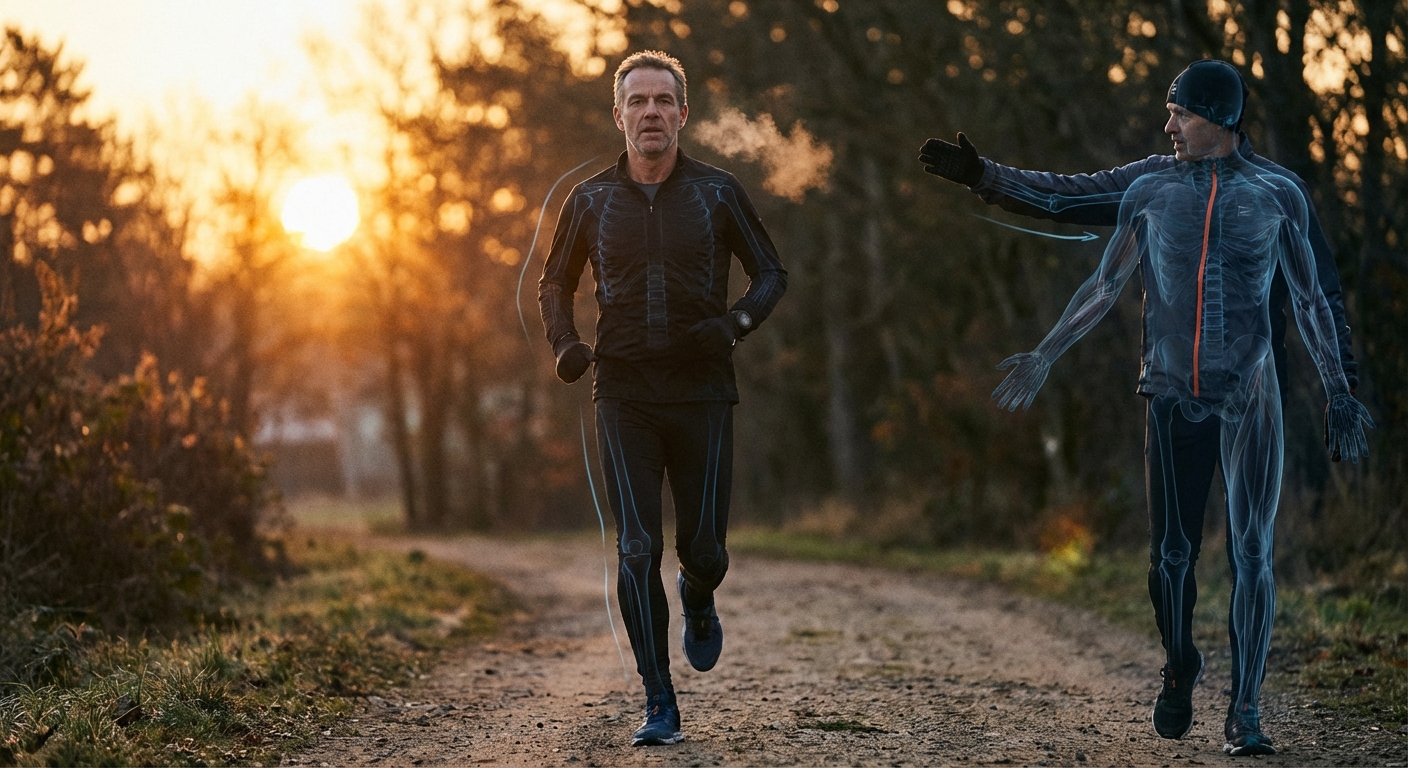
When people think about form, they usually picture lifting weights. But in cardio, thousands of repeated steps or strokes can either build you up or break you down. Good technique boosts efficiency, reduces injury risk, and makes every session feel smoother.
Why Form Matters More Than You Think in Cardio
This playbook walks through form, breathing, and setup for the most common cardio modes, plus simple progressions, nutrition basics, and tracking tools so your endurance gains last for life.
Running & Jogging: Efficient, Joint-Friendly Technique
1. Posture and Alignment
- Head: Look forward, not down. Imagine a string gently lifting the crown of your head.
- Shoulders: Relax them; don’t shrug toward your ears.
- Torso: Slight forward lean from the ankles, not from rounding the back.
2. Foot Strike and Stride
- Aim to land with your foot under your center of mass, not far in front.
- Think of your foot landing mid‑foot to slightly toward the ball, then letting the heel kiss down naturally.
- Shorten your stride slightly and increase cadence (steps per minute) to around 160–180 for many runners. Comfort matters more than any specific number.
3. Arm Action
- Elbows bent roughly 80–100°.
- Swing from the shoulder joint, hands moving from around hip level to slightly below chest level.
- Keep hands relaxed (imagine holding a potato chip without crushing it).
4. Breathing Mechanics
- Inhale through the nose and mouth, exhale through the mouth.
- Use a simple rhythm like 2 steps inhale, 2–3 steps exhale at moderate paces.
- Focus on diaphragmatic breathing: belly and lower ribs expand as you inhale.
Walking: Not “Just Walking” When You Do It Right
Technique Tips
- Walk tall with a neutral spine; avoid excessive leaning backward or forward.
- Let your arms swing naturally; exaggerating the swing slightly can increase calorie burn.
- Push off through the big toe on each step to engage glutes and calves.
Progression Ideas
- Extend duration (e.g., from 20 to 40 minutes).
- Add mild inclines for more challenge without impact.
- Introduce short brisk intervals: 1–2 minutes faster walk every 5 minutes.
Walking with solid technique can be a cornerstone of your cardio, especially on recovery days.
Cycling (Indoor & Outdoor): Power Without Pain
Bike Setup Basics (Indoor)
- Seat Height: With your heel on the pedal at its lowest point, your leg should be almost straight. When you clip in or place the ball of your foot on the pedal, you’ll have a slight knee bend (about 25–30°).
- Seat Fore/Aft: With the pedals horizontal (one forward, one back), the front knee should stack roughly over the ball of the foot.
- Handlebar Height: For beginners or those with back tightness, keep handlebars slightly higher for comfort.
Pedaling Technique
- Imagine smooth circles, not just stomping down.
- Push down, then sweep back slightly at the bottom, and lightly unweight on the upstroke.
- Keep cadence (RPM) mostly between 80–100 for steady riding if resistance allows.
Breathing and Effort
- At easy to moderate intensities, you should sustain conversation.
- For intervals, focus on smooth, deep breaths and avoid holding your breath while pushing hard.
Rowing: Full-Body Cardio With Strength Benefits
Rowing is one of the best bang‑for‑your‑buck cardio tools—if your form is on point.
The Rowing Stroke: Four Phases
Catch (Start Position):
- Shins vertical, heels down if possible. - Hinge slightly forward from hips, shoulders in front of hips, arms straight.
Drive:
- Legs power first. Push through the feet and extend knees. - Once legs are nearly straight, lean back slightly (about 10–15°) from the hips. - Then pull handle to lower ribs, elbows close to the body.
Finish:
- Legs straight, torso leaning slightly back, handle at lower ribs. - Shoulders relaxed, wrists neutral.
Recovery:
- Arms extend first. - Then torso hinges forward. - Then knees bend last as you slide to the catch.
The mantra: Legs → Hips → Arms, then Arms → Hips → Legs.
Common Mistakes
- Bending knees too early on the recovery, crowding the stroke.
- Rounding the lower back instead of hinging from the hips.
- Yanking with arms only—let the legs drive most of the power.
The Treadmill: Technique and Safety
Smart Setup
- Use a slight incline (1–2%) to better simulate outdoor running and reduce joint stress.
- Avoid holding onto the front or side rails unless you need temporary support.
Form Checklist
- Stay close to the front of the belt, not drifting far back.
- Keep your gaze forward, shoulders relaxed.
- If you must hold on at steeper inclines, lighten your grip and reduce speed rather than leaning heavily.
Avoiding Common Cardio Injuries
Shin Splints (Medial Tibial Stress Syndrome)
- Progress impact slowly; avoid sudden jumps in running volume. - Include calf raises and foot strengthening exercises. - Choose cushioned, appropriate footwear and softer surfaces when possible.
Runner’s Knee (Patellofemoral Pain)
- Ensure hips and glutes are strong (add squats, glute bridges, lateral band walks). - Keep knees tracking over toes, not caving inward.
Low Back Discomfort
- Maintain a neutral spine in all cardio modes. - Strengthen core with planks, dead bugs, and anti-rotation work.
Overuse and Burnout
- Honor at least 1–2 rest or very light days per week. - Rotate modalities (run one day, bike or row another).
Breathing Strategies: Turn Oxygen Into Performance
For Easy Cardio
- Use steady, relaxed diaphragmatic breathing.
- Try a 3–3 or 4–4 pattern (3–4 steps/bike strokes in, 3–4 out).
For Hard Efforts & HIIT
- Shorter patterns like 2–2 or 2–3 help match breath to intensity.
- Do not force hyperventilation; focus on deep, complete exhales to allow full inhales.
Nasal vs Mouth Breathing
- Nasal breathing is useful at lower intensities to train control and CO₂ tolerance.
- During intense work, mouth breathing becomes necessary. Efficiency > strict rules.
Fueling Technique: Nutrition That Matches Your Effort
Good form plus poor fueling still leads to underperformance.
For Low to Moderate Cardio (Up to ~60 Minutes)
- A balanced meal 2–3 hours before is sufficient.
- Include lean protein + complex carbs + some fat (example: chicken, rice, vegetables with olive oil).
For Longer or Harder Sessions
- Carbs become more crucial. Aim for:
- Pre: 1–4 g carbs/kg bodyweight in the 1–4 hours before longer efforts (choose the low end if closer in time).
- During: 30–60 g carbs/hour for sessions beyond 60–90 minutes.
- Post: 20–30 g protein + moderate carbs to replenish glycogen.
Hydrate with water; add electrolytes for sweaty or hot conditions.
How to Track Technique and Progress Over Time
1. Video Yourself
- Take short videos from the side and front while running, rowing, or cycling.
- Look for posture alignment, knee tracking, and rhythm.
2. Log Sessions and RPE
- Record duration, distance, and how hard it felt on a 1–10 scale.
- Over time, the same pace should feel easier and score a lower RPE.
3. Heart Rate Trends
- Track resting heart rate in the morning; gradual decreases often signal better cardio fitness.
- On familiar routes, compare average heart rate for the same pace.
4. How Your Body Feels
- Note joint discomfort, energy levels, and sleep quality.
- Use this feedback to adjust volume, intensity, and technique focus.
Sample “Form-First” Cardio Week
Day 1 – Technique Run or Walk
20–30 minutes easy; focus on posture, cadence, and soft landings.
Day 2 – Bike or Row Drills
10 minutes easy + 6 × 1 minute technique focus (smooth strokes or pedal circles) + 1 minute easy.
Day 3 – Rest or Mobility
Day 4 – Interval Day (Any Mode)
10 min warm-up
6–8 × 30 sec faster + 90 sec easy, with breathing focus
10 min cool-down
Day 5 – Steady-State Session
30–45 minutes at conversational pace, emphasizing relaxed shoulders and diaphragmatic breathing.
Day 6 – Fun Cardio
Hike, dance, sports—move with joy and intention.
Day 7 – Rest
Your cardio doesn’t have to be a grind. With sound technique, thoughtful breathing, supportive nutrition, and smart tracking, every step, stroke, and spin becomes an investment in lifelong endurance. Train with intention now so your heart and joints thank you years down the road.