
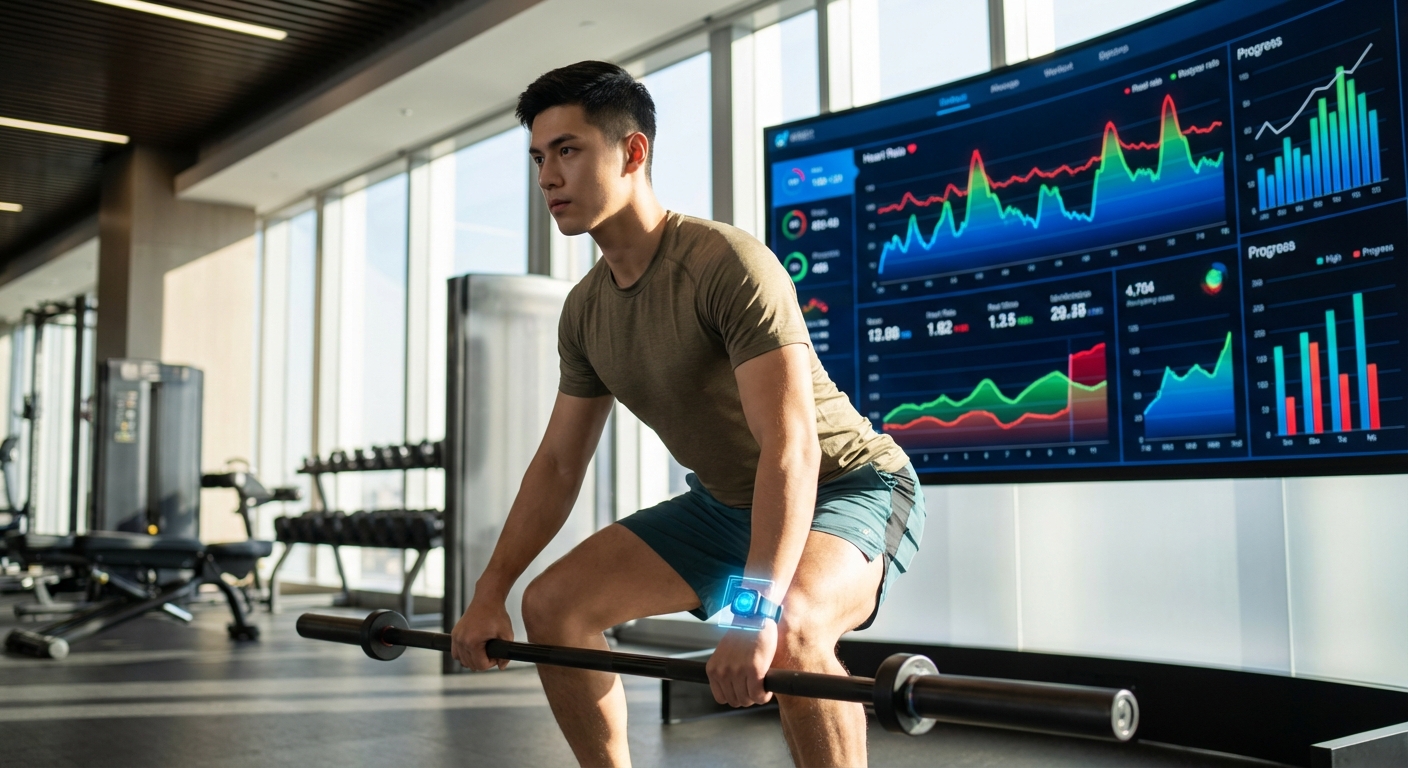
Motivation gets you started; data keeps you honest. When you combine smart workout gear with simple tracking habits, you turn each session into a mini‑experiment. Over time, that evidence reveals what truly works for you.
Train Like a Scientist: Let Your Gear Collect the Evidence
This guide shows how to build a feedback loop using clothing, shoes, wearables, and classic tools like notebooks and cameras. You’ll get practical routines, form cues, nutrition frameworks, and tracking systems for beginners and advanced athletes.
Step 1: Equip Yourself to Measure, Not Just to Move
Core Tracking Gear
- Training log or app – the foundation
- Wearable or heart rate monitor – optional, but useful
- Smartphone camera – highly underrated form and progress tool
- Body-composition or tape measure – for periodic check‑ins
Supportive Performance Gear
- Consistent shoes for your main activity
- Breathable clothing for comfort and focus
- Optional: lifting belt, straps, compression for advanced trainees
Your primary question: Can I repeat this setup consistently so my data is comparable?
Step 2: Build a Repeatable Training Framework
Consistency makes your data meaningful. Choose a simple, sustainable program structure.
Example 3-Day Full-Body Routine (All Levels)
Day 1 – Strength Emphasis
- Squat (or goblet squat) – 4×5–6
- Bench/floor press – 4×5–6
- Row – 4×6–8
- 10× (30 seconds hard / 60 seconds easy) on bike, rower, or track
- Plank – 3×30–45 seconds
- Side plank – 3×20–30 seconds/side
- Romanian deadlift – 3×8–10
- Pull-up/pulldown – 3×8–12
- Lunge – 3×8/leg
- Shoulder raise + curls + triceps work – 2–3×10–15 each
Day 2 – Conditioning & Core
Day 3 – Hypertrophy & Accessories
Use the same shoes and main implements for several weeks to keep variables stable.
Step 3: Use Gear to Improve Exercise Form
Smartphone Camera: Your Free Coach
Set your phone on a stable surface, hit record, and capture:
- Side view for squats, hinges, and presses
- Front view for squats and lunges
- Neutral spine (no excessive rounding/arching)
- Knees in line with toes
- Bar/path close to your center of mass
Review key points:
Record 1–2 sets per lift each week and compare over time.
Shoes and Clothing for Technique Feedback
- Flat shoes: easier to see and feel foot pressure in squats/deadlifts.
- Fitted tops/shorts or tights: let you see joint angles and depth, especially at hips and knees.
Form improves when you can actually see what you’re doing.
Step 4: Attach Metrics to Each Piece of Gear
1. Strength Gear Metrics
Using barbells, dumbbells, bands, or machines:
- Weights, reps, sets – log every session
- RPE (Rate of Perceived Exertion) 1–10 per working set
- Rest intervals – approximate is fine (e.g., 90 seconds)
- Squat: 4×5 @ 100 kg, RPE 7, 8, 8, 9
Example log entry:
2. Conditioning Gear Metrics
Using a treadmill, bike, rower, or running shoes:
- Distance covered
- Time and pace
- Heart rate (if available)
- 5 km run – 29:30, average HR 152 bpm, RPE 7
Example:
3. Recovery Gear Metrics
Using foam rollers, massage tools, sleep trackers:
- Daily soreness rating (0–10)
- Sleep duration and quality (subjective or via device)
- Perceived stress level (0–10)
Over weeks, you’ll see how sleep and recovery tools affect performance numbers.
Step 5: Nutrition – The Data Your Body Feels
Workout gear and data are only as good as your fueling.
Baseline Targets
- Protein: 1.6–2.2 g/kg/day
- Carbs: 3–6 g/kg/day (scaled to training volume)
- Fats: 0.5–1 g/kg/day
You don’t need to track forever, but doing it for 1–2 weeks can calibrate your intuition.
Pre-Workout (60–90 minutes before)
- 20–30 g protein (e.g., Greek yogurt, shake)
- 20–40 g carbs (fruit, oats, rice cakes)
Post-Workout (within 2 hours)
- 20–40 g protein
- 30–60 g carbs
- Energy levels during workouts (1–10)
- Performance trends on days with solid vs. poor fueling
Track:
Step 6: Turn 4 Weeks of Data Into Better Training Decisions
Use a simple 4‑week experiment structure.
Week 1 – Baseline
- Train with your current gear and routines.
- Log everything: loads, reps, times, RPE, sleep, and soreness.
Week 2 – Small Gear Adjustment
Examples:
- Swap running shoes for flat shoes on strength days.
- Add a belt on top sets of squats/deadlifts.
- Use wrist wraps on heavy pressing days.
- RPE at given loads
- Joint comfort
- Technique (via video)
Keep the program the same and see how the new gear affects:
Week 3 – Nutrition Focus
- Tighten up pre‑ and post‑workout meals.
- Aim to hit protein and hydration targets daily.
- Faster rep speeds at same weight
- Better session energy
- Reduced next‑day soreness
Look for:
Week 4 – Analyze and Adjust
Review your log for 4 weeks:
- Which days felt best, and what gear/nutrition/sleep did you have?
- Are loads, reps, or times clearly improving?
- Did any gear changes reduce pain or improve stability?
Keep what worked. Drop what didn’t.
Beginner vs. Advanced: How Deep Should You Go With Data?
Beginners: Simple Is Powerful
Focus on:
- Showing up 3×/week
- Logging exercises, sets, reps, and rough effort
- Capturing a few videos per month
- Comfortable, supportive shoes
- Breathable clothing
- Basic resistance (bands, dumbbells)
Gear priorities:
Advanced Trainees: Precision and Specificity
Track:
- Volume loads per muscle group
- Specific velocity (if you have a bar speed device)
- Heart rate variability (HRV) if using a high‑quality wearable
- Specialized shoes (lifters, track spikes, race shoes)
- Belts, wraps, and compression selectively
- Devices that genuinely guide training, not distract
Gear priorities:
Common Pitfalls When Using Gear and Data
- Changing too many variables at once – you won’t know what caused progress or plateaus.
- Chasing numbers over form – PRs don’t matter if they’re built on dangerous mechanics.
- Obsessing over daily fluctuations – look for trends over weeks, not single sessions.
- Buying gear instead of doing the work – tools amplify effort, they don’t replace it.
Make Your Gear Work as Hard as You Do
Your workout gear should do more than look the part. Shoes stabilize you. Clothing keeps you comfortable. Belts, straps, and compression fine‑tune performance. Trackers and notebooks capture the story.
When you align your equipment, training plan, nutrition, and tracking, you create a system where every rep and every step provides feedback. That’s how progress stops being random and starts becoming inevitable.