
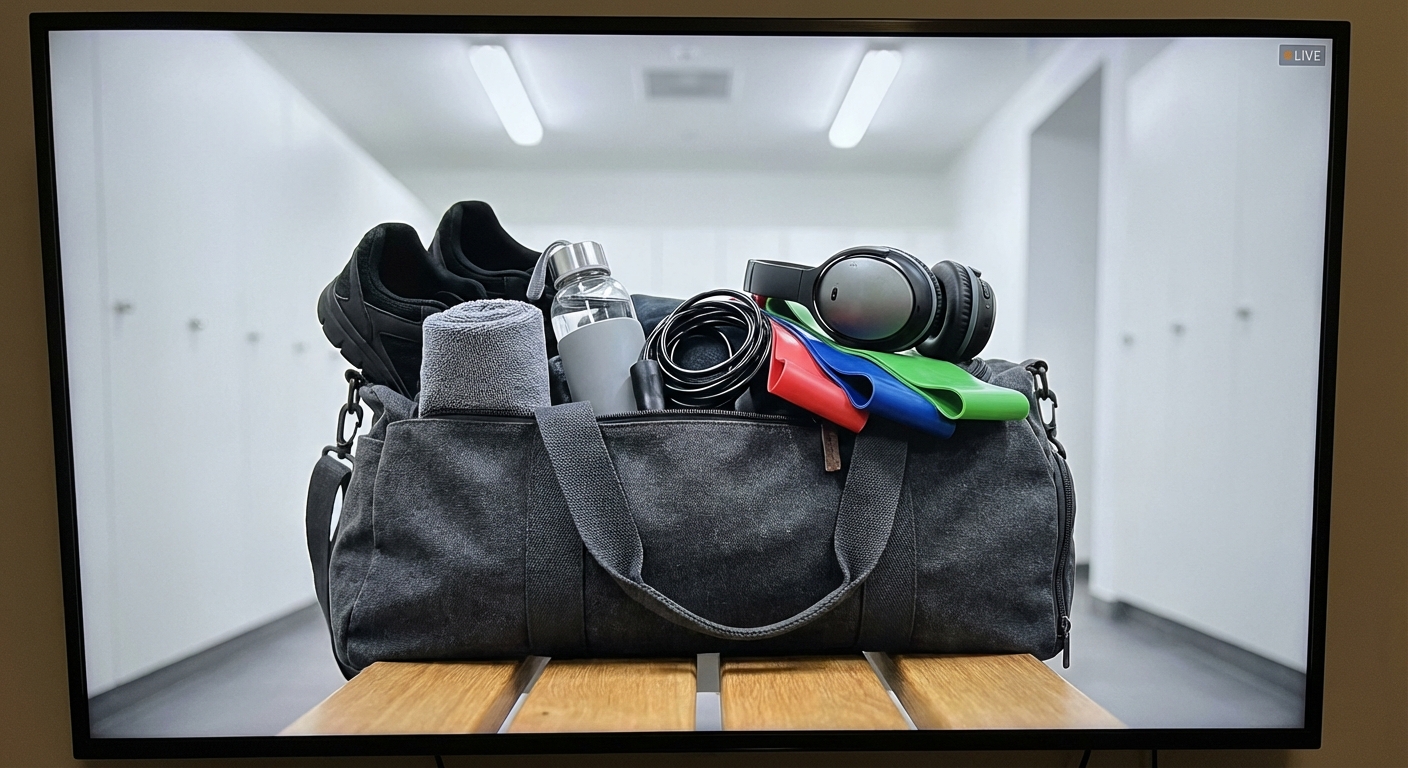
You don’t need a garage full of equipment or a high-end gym membership to build serious strength, conditioning, and confidence. What you need is a focused set of tools that are versatile, durable, and backed by exercise science.
Why Less (and Smarter) Gear Can Build a Stronger Body
This list-style guide shows you how to assemble a minimalist gym bag—just 10 key items—that lets you train effectively anywhere. You’ll also get sample routines, technique cues, nutrition pointers, and progress‑tracking ideas for each piece of gear.
1. Flat Training Shoes
Why they matter: A stable, flat shoe improves force transfer and balance in squats, deadlifts, and presses.
Use them for:
- Strength sessions
- Short conditioning circuits
Form tip: With flat shoes, practice creating tension from the ground up. Grip the floor with your toes, keep your weight distributed over your “tripod foot” (heel, big toe, little toe), and drive your knees in line with your toes on squats and lunges.
Track this:
- Squat and deadlift loads while using the same pair of shoes to keep variables consistent.
2. Resistance Mini-Bands
Why they matter: They’re perfect for glute activation, shoulder stability, and joint-friendly warmups.
Sample warmup (before lower-body days):
Lateral band walk – 2×10 steps each way
Banded glute bridge – 2×15
Banded clamshell – 2×12/side
Evidence angle: Research highlights the importance of glute activation for knee stability and reducing injury risk; bands help recruit the glute medius and maximus effectively.
Track this:
- Note how your squats and deadlifts feel after 4 weeks of consistent band warmups—less knee drift, better hip drive, and more stable form.
3. Long Resistance Bands with Handles or Loops
Why they matter: They replace cables and machines for rows, presses, pull‑throughs, and more.
Full-body band workout (2–3 rounds):
- Band row – 12–15
- Band chest press – 10–12
- Band pull‑through (hip hinge) – 12–15
- Band overhead press – 10–12
- Band face pull – 12–15
Form tip: On rows and presses, think “shoulder blades first.” Retract or protract your shoulder blades under control before your arms finish the movement to build better scapular mechanics.
4. Adjustable Dumbbells or Two Kettlebells
Why they matter: With progression-friendly load options, you can follow structured programs that stimulate real adaptations.
Evidence angle: Progressive overload—gradually doing more work via weight, reps, or sets—is one of the most consistently supported principles in strength science.
Basic strength template (3 days/week):
Day 1 – Push Focus
- Goblet squat – 3×8–10
- Floor press – 3×8–10
- Overhead press – 3×8–10
- Romanian deadlift – 3×8–10
- Single-arm row – 3×10/side
- Hip thrust – 3×10–12
- Kettlebell swings – 4×12–15
- Farmer carry – 4×30 seconds
- Side plank – 3×20–30 seconds/side
Day 2 – Pull Focus
Day 3 – Power & Core
Increase load or reps by small increments each week if technique remains solid.
5. Jump Rope
Why it matters: A compact, powerful conditioning tool that trains coordination, calf stiffness, and cardiovascular fitness.
Beginner jump rope conditioning:
- 30 seconds jumping, 30–60 seconds rest
- 8–10 rounds
- 45 seconds fast, 15 seconds rest
- 10–12 rounds
Advanced interval idea:
Evidence angle: High‑intensity interval training (HIIT) with tools like jump ropes can improve VO₂ max and metabolic health in less time than steady‑state cardio.
Form tip: Keep elbows close to your body, spin from the wrists, and keep jumps low—just enough clearance for the rope.
6. Suspension Trainer (or Rings)
Why it matters: Adjustable bodyweight training for rows, pushups, lunges, and core work, scalable from beginner to advanced.
Sample routine:
- Suspension row – 3×8–12
- Feet‑elevated pushup – 3×8–12
- Single‑leg suspended lunge – 3×8/leg
- Fallout (ab rollout variation) – 3×8–10
Form tip: Maintain a straight line from head to heels—no sagging hips. Think “ribs down, glutes tight.”
7. Lifting Straps and/or Chalk
Why they matter: Grip can be a limiting factor in pulling exercises. Straps or chalk allow your back and hips to reach appropriate loading without being held back solely by grip fatigue.
Evidence angle: Over time, adequate loading of large muscle groups (glutes, hamstrings, lats) is essential for strength and hypertrophy. Strategic use of straps prevents grip from being the bottleneck on heavy sets.
Rules of thumb:
- Train raw (no straps) on lighter sets to keep building grip.
- Use straps on heaviest sets of deadlifts or rows when grip is the only thing failing.
8. Foam Roller or Massage Ball
Why it matters: Self‑myofascial release can help reduce perceived muscle tightness and may improve short‑term range of motion.
5-minute pre‑workout sequence:
Calves – 30–45 seconds/side
Quads – 30–45 seconds/side
Upper back – 60 seconds
Follow with dynamic mobility (leg swings, arm circles) before loading.
Evidence angle: Foam rolling plus dynamic warmups tends to be more beneficial than static stretching alone for performance preparation.
9. Training Log or App
Why it matters: What gets measured gets managed. Tracking your work turns effort into a clear progression plan.
Track per workout:
- Exercises, sets, reps, weights
- Rest periods (approximate)
- Perceived exertion (1–10 scale)
- Bodyweight trend (if relevant)
- Energy levels and sleep quality
- Notes on how certain gear (shoes, straps) affected performance
Weekly check‑ins:
Evidence strongly supports that self‑monitoring (logging food, training, or steps) is linked to better adherence and outcomes.
10. Water Bottle and Pre/Post-Workout Nutrition Kit
Why they matter: Hydration and nutrition are fundamental performance gear—just internal instead of external.
Hydration goal:
- Clear to pale-yellow urine most of the day
- Extra 250–500 ml during and after intense sessions
- Greek yogurt with berries and a small handful of oats
- Protein shake plus a banana or rice cakes
- Total protein: 1.6–2.2 g/kg/day
- Carbohydrates scaled to training load (more on heavy or long days)
Pre‑workout snack idea (60–90 minutes prior):
Post‑workout snack idea:
Aim for:
Putting It All Together: A 4-Week Minimalist Program
With these 10 items in your gym bag, follow this structure:
Week 1: Learn movement patterns and track baseline weights and times.
Weeks 2–3:
- Increase one variable per session: +1–2 reps, +2.5–5% load, or +1 round in circuits.
- Maintain or slightly reduce volume.
- Focus on cleaner form, better mind‑muscle connection, and improved breathing.
- Heavier lifts with stable technique
- Shorter rest for the same jump rope intervals
- Less joint discomfort thanks to more appropriate footwear and warmups
Week 4:
Review your training log at the end of the month. Look for:
Minimal gear, intelligently chosen, can deliver maximal results. It’s not the size of your gym that matters—it’s how you use the tools you have.