
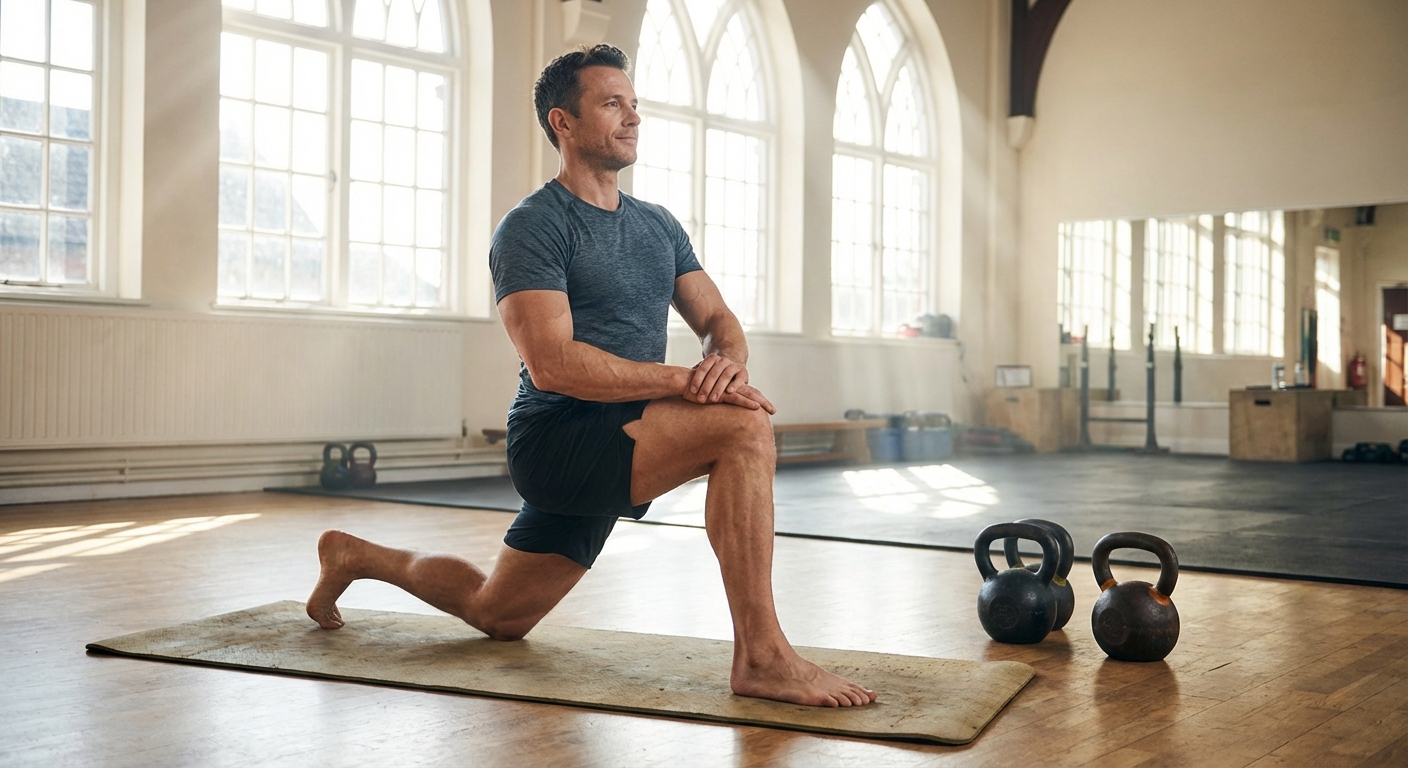
Hyper-flexible joints without muscular control are unstable. On the other hand, pure strength without adequate range of motion creates compensations and wear-and-tear.
Flexibility Without Strength Is a Liability
Yoga sits at the intersection of strength and flexibility, training:
- Muscles to generate force in long positions
- Joints to move freely yet stay supported
- The nervous system to allow greater, safer ranges
When used strategically, yoga becomes a performance tool—not just a relaxation break.
The Science of "Strong Flexibility"
Traditional static stretching focuses on passively elongating muscles. Useful, but incomplete. To support real-world movement (lifting, running, sport), you need active flexibility—control at the end of your range.
Research on mobility and injury prevention shows:
- Strength at end range protects tendons and ligaments by letting muscles absorb force.
- Eccentric loading (lengthening under tension) can increase range of motion and tissue resilience.
- Neuromuscular control (your brain’s ability to stabilize joints) is as important as tissue length.
Yoga naturally trains all three through slow, controlled poses.
Key Principles for Combining Yoga and Strength Training
Place Yoga Away From Max-Strength Sessions
- Heavy squats or deadlifts? Do deeper yoga either on a separate day or post-lifting with low volume. - Light, short mobility flows before lifting can help, but avoid long, intense static holds pre-max lifting.
Train Mobility Like Strength
- Sets, reps, and progressive overload apply. - Example: 3 sets of 30-second lunge hold, progressing to 45 seconds, then adding end-range isometrics.
Focus on Priority Joints
- Hips, ankles, thoracic spine, and shoulders typically give the biggest performance payoff.
Use Breath as Your "Load Regulator"
- If breath becomes choppy or you can’t exhale fully, lighten the pose.
A Hybrid Yoga + Strength Mobility Routine
Use this 3x per week alongside your lifting or sport training. It’s designed for athletes of all levels.
Section 1: Prep (5–7 Minutes)
Goal: Wake up joints, increase blood flow, and prime the nervous system.
90/90 Hip Rolls x 8 each side
- Sit with one leg in front, one behind (both bent ~90°). - Slowly rotate knees side to side. - Why: Actively explores hip internal and external rotation.
World’s Greatest Stretch (Dynamic Lunge Flow) x 4 each side
- Step into deep lunge, both hands inside front foot. - Rotate chest and arm up toward ceiling, then switch sides. - Why: Thoracic rotation, hip flexor length, hamstring prep.
Scapular Push-Ups x 10
- In plank, keep arms straight, pinch shoulder blades together, then spread them apart. - Why: Preps shoulders and mid-back for weight-bearing.
Section 2: Strength-Infused Flexibility (15–18 Minutes)
A1. Crescent Lunge with Isometric Squeeze
- Step into lunge, back heel lifted, arms overhead.
- Gently pull front heel back and back toes forward (they won’t move) to activate hips.
- Hold 30–40 seconds each side.
- 2–3 sets.
Benefits: Hip flexor flexibility, glute activation, core stability.
A2. Chair Pose (Utkatasana)
- Feet hip-width, sit back as if into a chair, arms overhead.
- Keep weight in heels and mid-foot, ribs over hips.
- Hold 30 seconds; rest 15 seconds.
- 2–3 sets.
Benefits: Builds strength at knee and hip flexion angles used in squats and jumps.
B1. Warrior III (Single-Leg Hinge)
- From standing, hinge forward on one leg, extend the other leg back, arms forward or on hips.
- Maintain a long spine; hips stay level.
- Hold 20–30 seconds per side.
- 2–3 sets.
Benefits: Hamstring length plus posterior-chain control, ankle and hip stability.
B2. Dolphin Pose
- From hands-and-knees, lower to forearms, then lift hips into an inverted V (like Down Dog on forearms).
- Walk feet in as comfortable; press chest back.
- Hold 30–40 seconds.
- 2–3 sets.
Benefits: Shoulder flexion range with strength; builds upper-body endurance.
Section 3: Deep Stretch & Down-Regulation (8–10 Minutes)
Pigeon or Elevated Pigeon (hips and glutes)
- Use a bench or bed for a gentler variation. - Hold 60–90 seconds per side. - Focus on slow exhales.
Supine Hamstring Stretch with Strap
- Lying on back, loop a strap or towel around one foot, leg extended. - Gently pull toward you until you feel a comfortable stretch. - Option: Add small ankle pumps (flex/point). - 60 seconds per leg.
Supported Fish Pose (Thoracic Extension)
- Lie with upper back on a block or bolster, arms relaxed open. - 2–3 minutes of relaxed breathing.
This final block tells your nervous system, "We’re safe, we can keep this new range," which makes gains more likely to stick.
Technique Cues That Protect Joints and Boost Results
- Neutral-ish Spine: Some rounding or arching is natural, but avoid extreme bends under load. Think “long spine” more than “straight back.”
- Knee Alignment: In lunges and squats, track knees over middle toes. If they collapse in, reduce depth and focus on control.
- Hand and Foot Engagement: Spread fingers and toes, press evenly. Stable foundations = safer joints.
- Move on Exhales: Sink deeper into poses as you exhale, not while holding your breath.
Fueling Strong Flexibility
- Pre-Session (30–90 Minutes Before):
- Light snack with carbs + a bit of protein (e.g., banana with Greek yogurt, toast with nut butter).
- Avoid heavy, fatty meals that make deep breathing uncomfortable.
- Post-Session:
- Especially after end-range strength work, treat it like a light lifting session.
- Aim for 20–30 g of protein plus carbs (fruit, whole grains) to support tissue repair.
- Daily Habits:
- Hydrate consistently; stiffness often correlates with poor fluid intake.
- Include anti-inflammatory foods: berries, leafy greens, turmeric, ginger, fatty fish.
Tracking Performance, Not Just Poses
Measurable ways to know this is working:
- Lifting Metrics:
- Can you hit full squat depth more comfortably?
- Do your deadlifts feel smoother off the floor?
- Any reduction in knee/hip/low-back discomfort at usual training loads?
- Movement Quality:
- Fewer compensations (heels lifting in squats, spine rounding too early).
- Improved balance on single-leg tasks.
- Recovery Markers:
- Less next-day stiffness.
- Better sleep quality after evening yoga sessions.
Log these alongside your strength numbers. Flexibility you can’t use under load doesn’t help you. This integration makes sure you own every new degree of motion.
The Takeaway: Use Yoga as a Performance Tool
Yoga is not the opposite of strength training—it’s the partner that unlocks more of your potential. Applied correctly, it trains:
- Strong muscles in lengthened positions
- Stable joints through their full range
- A calmer nervous system that allows, not blocks, movement
Build 2–3 of these hybrid yoga sessions into your weekly plan. Stay consistent, respect your limits, and fuel your body well. Over time, you’ll feel the difference not just in how far you can stretch—but in how powerfully and safely you move in every workout.